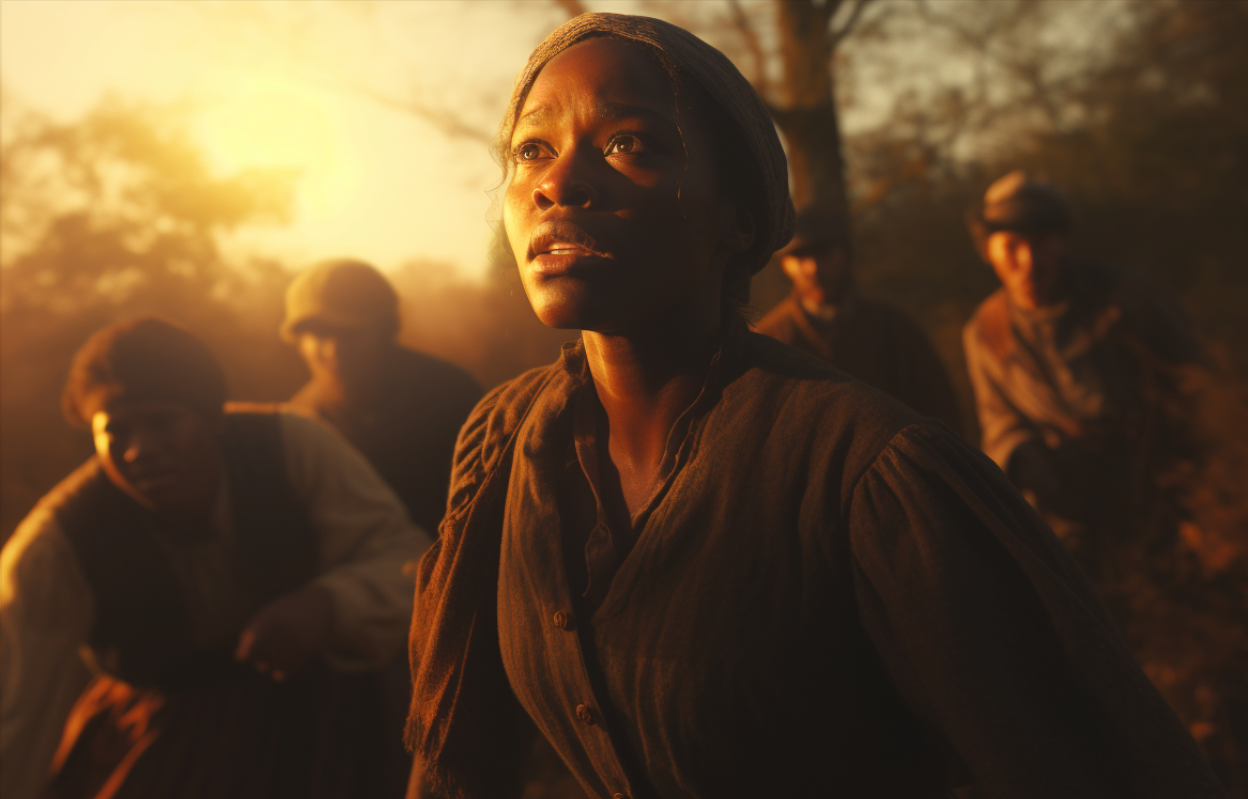
Harriet Tubman was born into slavery in Maryland around 1822, a world that treated her as property from her first breath. As a child she was hired out, beaten, and once struck in the head by a heavy iron weight thrown by an overseer — an injury that caused seizures and vivid visions for the rest of her life. She would later describe those visions as messages from God.
In 1849, fearing she was about to be sold further south, she made a decision that would change history: she ran.
The escape
Traveling by night, guided by the North Star and a network of secret helpers, Tubman covered some ninety miles to Pennsylvania and crossed into a free state. She later recalled the moment she realized she was free:
"I looked at my hands to see if I was the same person now I was free. There was such a glory over everything."
For most people, that glory would have been enough. For Tubman, it was only the beginning.
The conductor
Tubman became the most famous "conductor" on the Underground Railroad — the secret web of routes, safe houses, and abolitionist allies that guided the enslaved toward freedom. Over roughly a decade, she returned to the South an estimated thirteen times and personally led some seventy people out of bondage, while giving instructions that guided many more.
She was fearless and exacting. She carried a pistol — as much to steady the terrified as to fend off slave catchers — and she famously said she never lost a single passenger. A bounty was placed on her head. She walked into that danger anyway, over and over, because she could not enjoy a freedom that others were denied.
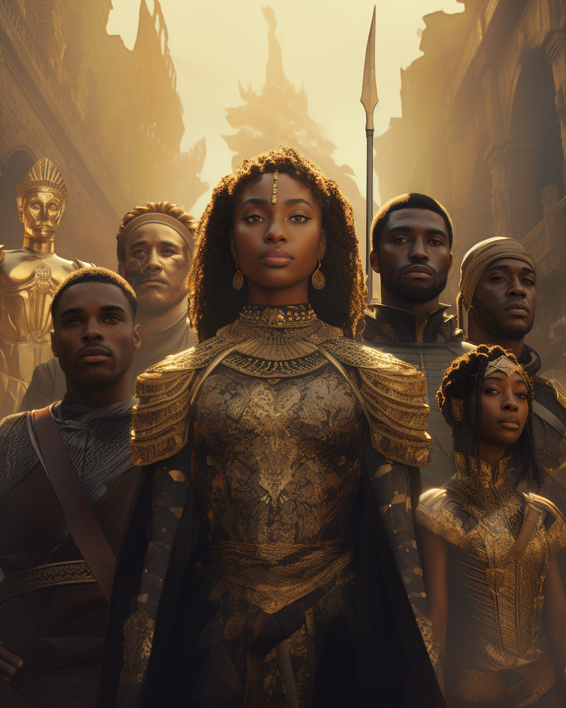
Her story, beautifully told.
Harriet Tubman is one of the unforgettable figures illustrated in The History of Black History, Vol. 1 — alongside Douglass, Truth, Du Bois and more.
Get it on Amazon →
Soldier, spy, and beyond
When the Civil War came, Tubman served the Union not only as a nurse but as a scout and spy — and in 1863 she helped guide the Combahee River Raid in South Carolina, which freed more than seven hundred enslaved people in a single operation, making her one of the first women in American history to lead an armed military raid.
She lived for decades afterward as an advocate for the freedpeople and for women's suffrage, dying in 1913 having spent nearly every year of her long life in service to others' freedom.
Why she still matters
Harriet Tubman's life answers a question every generation has to ask again: what do we owe one another? Her answer was total. Freedom, to her, was not a possession to be guarded but a debt to be paid forward, at any risk. That is why, more than a century later, her name still stands for courage itself — and why her story sits at the heart of The History of Black History.